



Firewood Processor With Conveyor: Stop Wasting Time on Manual Handling
21
October
While cutting and splitting firewood can be very time consuming, moving the material between stages of processing can take up almost as much time. A round log may roll out of place, and split wood may fall to the ground. You then have to move the same wood again and again before you can put it onto a trailer, into a bag, or into storage. A well-planned firewood processing setup allows you to keep moving material toward its final destination.
Why Repeated Lifting Breaks the Rhythm of Firewood Work
While processing firewood at home does not have to look like a production line, the work follows a sequence: receiving and staging logs, cutting and splitting individual pieces, and then moving the prepared firewood into dry storage. When work areas are spread out, repeated turning, bending, and clearing space around the machine make the process less efficient.
Follow the Log from the Feed Area to the Finished Pile
Before you set up the machine, walk the route. Identify where unprocessed logs will be staged, mark out a working area, and choose a storage point for processed logs. The shortest route is not always a straight line. You will also need to allow enough space to drive up to the feed area and then pull a loaded trailer away from the pile without backing up through the logs.
With a little planning, you can make good use of a conveyor. Split pieces can be carried past the work area of the processor, instead of being dumped there, and you can prepare the next log while the finished wood is being carried to its destination.
Put the Drop Point Where the Wood Needs to Go
The ideal location for the end of the conveyor depends on where you intend to store your finished firewood. If this firewood is to be loaded onto a trailer, leave enough room to reposition the trailer if needed. If you are filling bags or containers, position them so full ones can be removed and empty ones placed in the discharge area without obstructing operations. For a loose storage pile of firewood, make sure the growing pile will not interfere with machine operation.
How Firewood Processing Equipment Keeps Material Moving
Firewood processing equipment should cut and split logs while moving finished wood away from the work area in order to achieve an optimal process flow.
Join Cutting, Splitting, and Discharge in One Flow
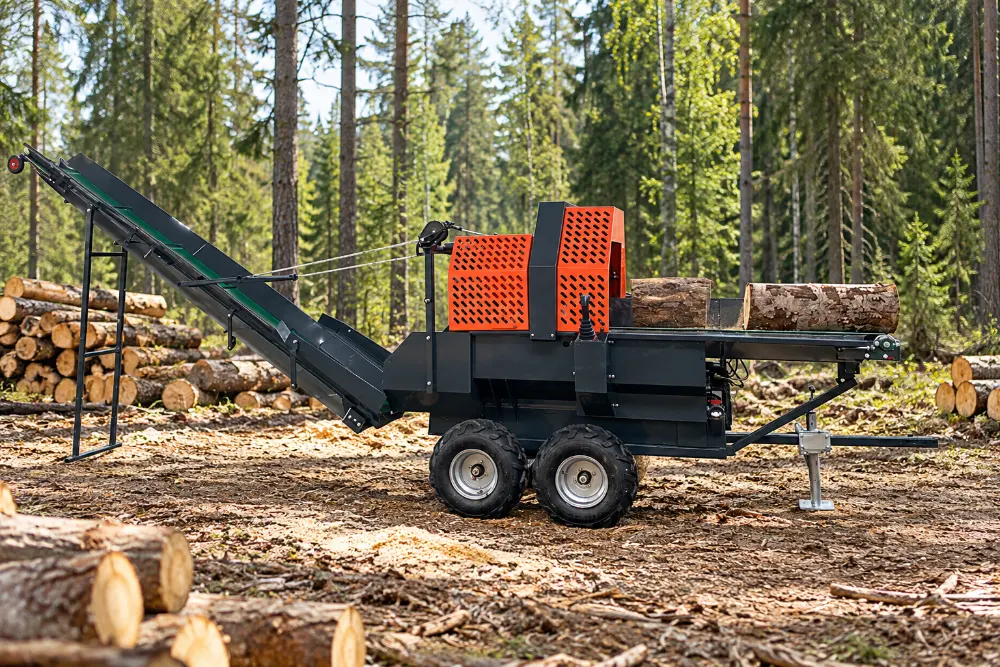
The RM500 JOY Firewood Processor is equipped with a hydraulic saw, a hydraulic log splitter, and a discharge conveyor. The sequence of processing a log is simple: feed in a log, cut and split it, then move the finished pieces away on the conveyor. The space to the side of the machine is then available for the next log. The stated hydraulic cycle time is 6 seconds; however, this is not the same as the total processing time for each log. The actual processing time per log and, consequently, daily processing output also depend on other factors in addition to this specification, such as the type and quantity of logs, machine setup and the operator’s working speed.
Maintaining a continuous workflow is more important than hitting some headline production number. For seasonal work, whether at home, on a farm, or in a private woodlot, working at a steady pace is typically more practical than working in bursts and then cleaning up.
Match Conveyor Placement to Trailers, Bags, or Storage Piles
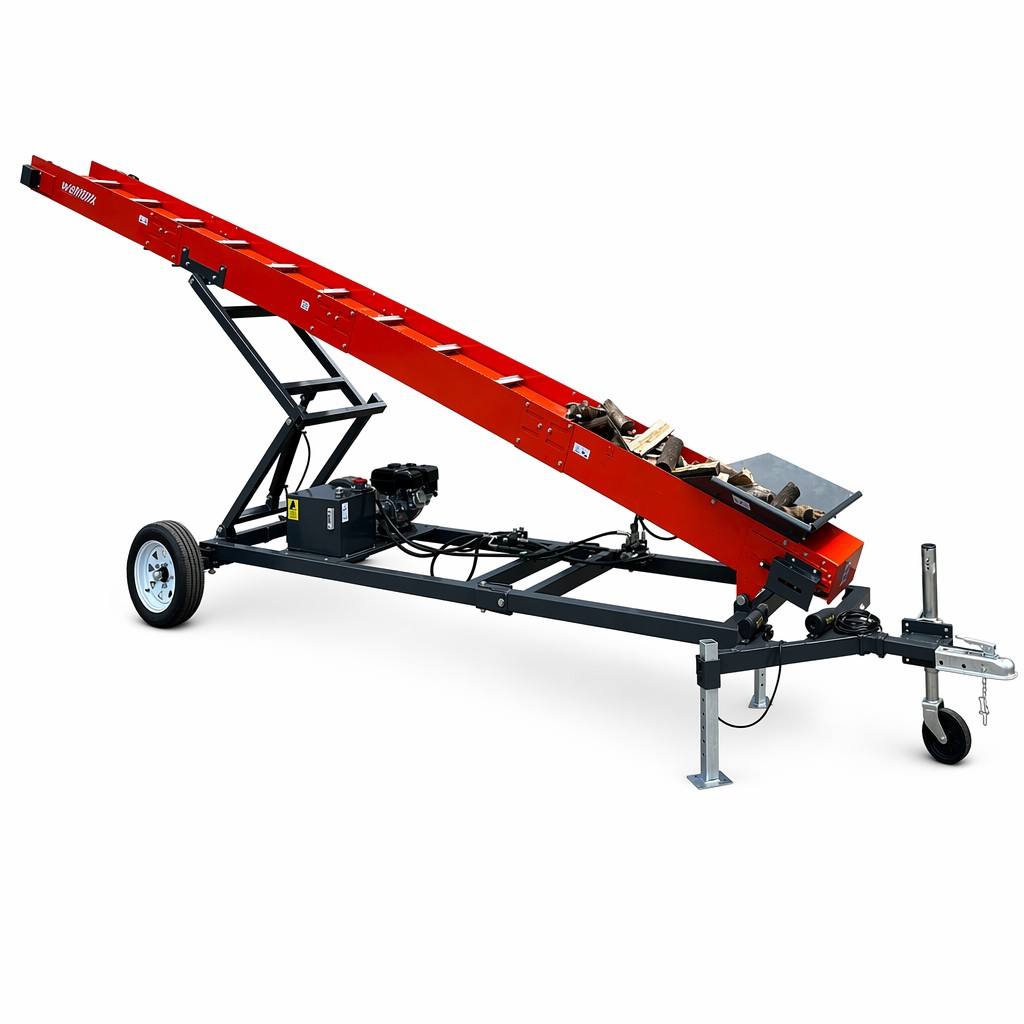
The hydraulic swing conveyor can direct finished firewood onto trailers, into bags and containers or onto stockpiles. The standard length of the conveyor is around 3.5 m, and the conveyor belt is approximately 300 mm wide. Note that the discharge height will depend on a number of factors and should be measured at the intended receiving point prior to ordering.
RIMA also offers a broader range of forestry and firewood equipment. When comparing options, consider the full route through your yard or shed, not just each processor’s footprint.
What the RM500 JOY Adds to Your Setup
The selection of firewood processing equipment should be based on the log sizes you handle most often, not on the occasional larger log.
Size the Machine Around the Logs You Actually Handle
According to the product specifications, the RM500 JOY has a maximum log diameter of about 19.7 inches and a maximum log length of about 19.7 inches. Compare these limits with the logs you typically process. Measure a representative sample from your log pile, including irregularly shaped pieces. If many logs are close to or exceed either limit, plan to trim or handle them separately.
Also, consider the size of the finished pieces and how they will fit through your stove opening, on your drying racks, in your bags, and in the storage space you have available. Efficient processing is only one part of the job; you also need to consider how the wood will be stored and handled after it has been processed.
Use Joystick Control and the Swing Conveyor as One System
The RM500 JOY is equipped with joystick control. Position the swing conveyor so that the operator has a good view of the feed path. From the control area, the operator should be able to see whether the receiving pile or container is full. The machine must be placed on a solid surface, and access to the controls must be kept unobstructed.
For more information about the manufacturer, please see the company background information for RIMA. RIMA produces a range of products including forestry, agricultural, small plant and snow equipment.
Build a Cleaner, More Predictable Work Area
A conveyor can help keep split wood from piling up around the processor, but good site planning is also needed. A sensible layout needs to include space for logs to be fed in, for the operator to work and for the firewood to be stacked once split.
Keep Feeding and Discharge Paths from Crossing
Stage unprocessed logs at one end of the processing site and discharge finished firewood at the other end when the site allows. Park the trailer or place the bags before startup. Regularly inspect the discharge end of the belt to prevent firewood from building up. These simple steps can help to keep your firewood processing on track.
Be sure to leave enough space to move around your work area throughout the day. Loaded trailers need a clear exit route. Full bags must be removed and replaced with empty ones. A loose pile of firewood will spread as it grows. Be sure to adjust your layout to ensure none of these items interfere with the feed route prior to processing the next batch of firewood.
Add Screening Only When the Finished Wood Needs It
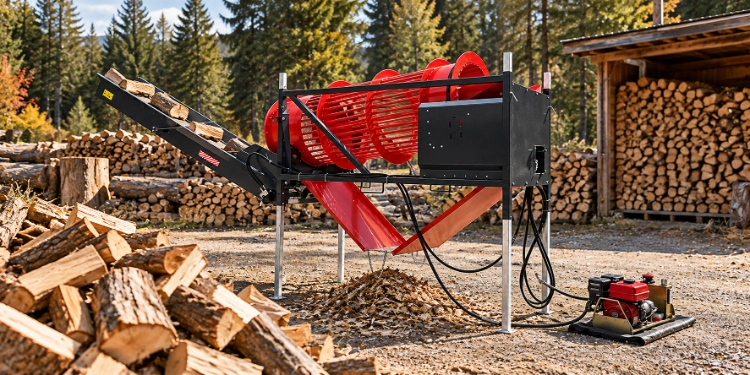
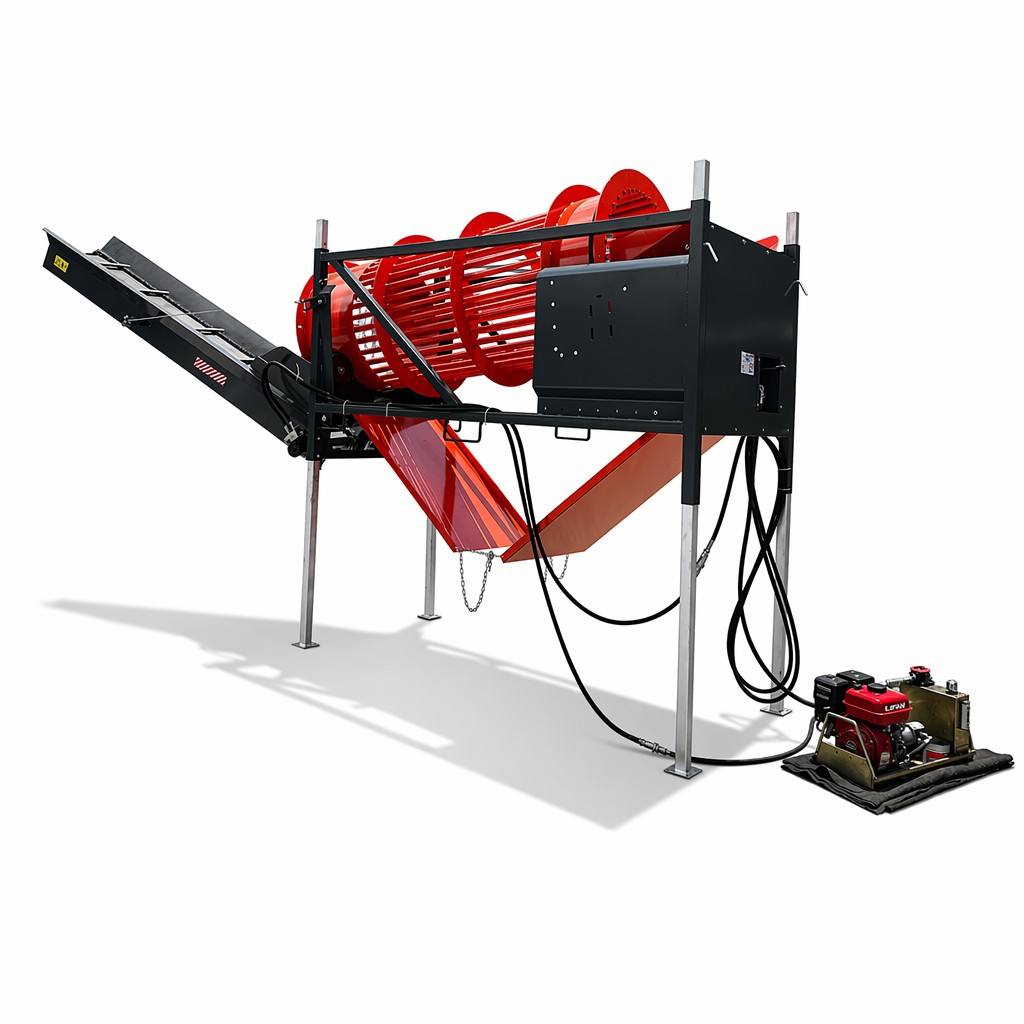
This is not a necessary addition to your home firewood processing setup. If you need to screen your firewood, the Firewood Cleaner-AutoDrum can be installed after the processing line. Firewood can also be loaded into it by hand from a sack or with a front-end loader. It is an optional downstream processing step.
It may be worth screening for loose debris in your firewood storage area, for example to prevent debris from getting into bags of firewood or being scattered during transport. Why dry firewood may need a second screening is covered on the RIMA web site. Keep the basic process of getting wood from your machine to your storage area as simple as possible – only add more stages if you need to.
Choose a Setup That Fits Your Property
Consider the approach to your work area, the amount of space you have for a conveyor and where the finished firewood will be discharged. Also note the height of your trailer sides or the top of your pile of processed wood and the power requirements of the machine. Also note the finished firewood length that your stove or storage method can accommodate. No single published dimension can address all of these requirements.
Check Access, Storage Height, Power, and Finished Piece Size
Create a sketch of the site including the location of gates, shed posts, other obstacles, and the slope of the site. Mark out turning space and the route that the finished wood will take from the processor. Compare the sketch with the processor’s log limits and also the conveyor’s approximate length of 11.5 ft. This will reveal any problems with the site layout before any heavy equipment is delivered.
Also, determine where to put those unusual logs and log off-cuts. They should be stored in an area where they will not block the infeed area or interfere with the handling of regular logs. A good system can handle unusual logs and off-cuts without causing problems, but a system designed to handle only straight logs can cause problems with irregular logs.
Use RIMA Product Support Before You Commit
Take measurements of the area where the splitter will sit, typical log dimensions, required finished length, and method of receiving logs at your property. RIMA can provide OEM and design services, and answer specific questions regarding your configuration and operating requirements, as well as how the conveyor will be positioned on your property, and what you need to do to get ready for delivery.
Conclusion
Conveyors can save a lot of time by carrying finished firewood to wherever it needs to go next. Rather than building up a pile next to your firewood processor and then shifting it all again, you can send finished wood straight to your trailer, bags, containers or storage area. The RM500 JOY is a powerful piece of kit with hydraulic cutting and splitting, all controlled from a single joystick. And with a swing conveyor that carries split wood away from the splitting section, it’s ideal for home, farm or woodlot use. We’d be happy to check over a proposed layout for you, and our RIMA service options are detailed here. If you are planning a new setup, share your site measurements and intended workflow with RIMA. The team can review the layout, discuss available support, and provide a quote based on your requirements.
FAQ
What Does a Conveyor Add to Firewood Processing Equipment?
A conveyor can transport finished firewood away from the splitting area and place it on a trailer, in a bag, in a container, or in a stockpile, eliminating the need to collect and move the same wood again.
What Log Size Can the RM500 JOY Process?
Maximum log diameter and length are both given as about 19.7 inches.
Can the Conveyor Discharge into a Trailer or Storage Pile?
The hydraulic swing conveyor can be set up to discharge firewood into trailers, bags or containers as well as onto existing storage piles.